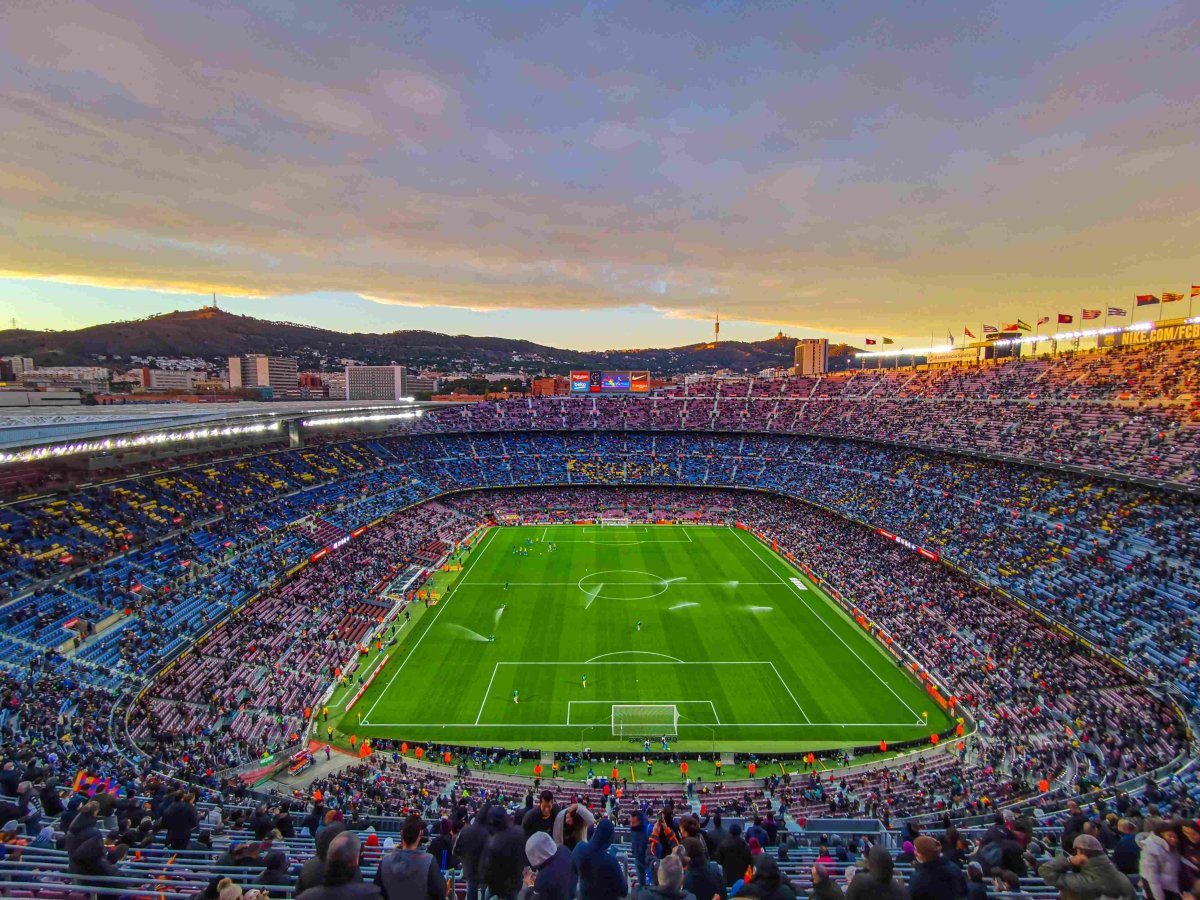
As European football continues its relentless march toward financial stratification, Sweden's Allsvenskan finds itself navigating an increasingly complex landscape.
While the Premier League, La Liga, Bundesliga, and Serie A dominate headlines and transfer markets, the Swedish top flight offers a compelling alternative narrative in 2025—one of sustainable growth, passionate fan engagement, and competitive balance that many of its wealthier counterparts have lost.
The Financial Chasm
The numbers paint a stark picture of European football's financial hierarchy. Premier League clubs generated revenues exceeding €7.1 billion (£5.9 billion) in the 2023 financial year.
In comparison, La Liga and the Bundesliga, the closest rivals, reported revenues of €3.7 billion and €3.6 billion, respectively. Against this backdrop, Allsvenskan operates in what might generously be called a different universe entirely.
While exact 2025 revenue figures for Allsvenskan remain elusive, the league's financial model represents a fascinating counterpoint to the arms race consuming Europe's elite competitions.
Allsvenskan is currently ranked third highest among the leagues in Scandinavia, after Norway and Denmark, and sits 23rd in UEFA's coefficient rankings—a position that accurately reflects both its limitations and its strengths.
The median revenue disparity tells the real story. The median revenue for a Premier League club is 60% higher than that of clubs in the Bundesliga and more than three times that of teams in Serie A and La Liga, particularly when comparing mid-table teams.
Allsvenskan clubs, by extension, operate on budgets that would barely cover a single transfer for many Premier League sides.
Competitive Balance
If financial muscle guaranteed sporting success, football would be a far more predictable affair. Yet Allsvenskan's 2025 season demonstrates that competitive balance remains one of the league's greatest assets.
Malmö FF will enter the season as defending champions, but their path to another title is far from guaranteed in a league where upsets occur with refreshing regularity.
The current season format maintains 16 teams playing 30 matches each, creating 240 total fixtures—a manageable schedule that allows for tactical preparation and reduces player burnout compared to the fixture congestion plaguing Europe's top leagues.
The season began on 29 March 2025 and will end on 9 November 2025 (not including play-off matches).
Compare this competitive uncertainty to recent trends in Europe's major leagues. Bayern Munich's dominance in the Bundesliga has been temporarily interrupted, but the fundamental structural advantages remain.
In La Liga, the duopoly of Barcelona and Real Madrid faces occasional challenges but rarely genuine threats. The Premier League's "Big Six" may have evolved into a more fluid concept, but financial resources still largely determine long-term success.
Allsvenskan's promotion and relegation system with Superettan maintains genuine consequences for poor performance.
The 14th-placed team of Allsvenskan will meet the third-placed team from 2025 Superettan in a two-legged tie on a home-and-away basis with the team from Allsvenskan finishing at home.
This playoff system adds drama while providing a safety net that prevents catastrophic relegation based on a single poor season.
Stadium Atmosphere
European football's trend toward sanitized, corporate experiences has made Allsvenskan's authentic fan culture increasingly valuable.
The 2024 season saw remarkable attendance figures, with total attendance in Allsvenskan 2024 season was 2218172 and average attendance per game was 9166.
More impressive than raw numbers is the passionate engagement. The record for highest average home attendance for a club was set by Hammarby in 2022 (26,372 over 15 home matches).
These figures may pale beside the Premier League's massive stadiums, but they represent genuine community investment rather than tourist consumption.
The Bundesliga leads European leagues in attendance, with 38,656 spectators per game in the 2024–25 season, but Allsvenskan's more intimate venues create atmospheric intensity that larger stadiums often struggle to match.
When AIK welcomed 36,602 fans for their 2024 opener, the Tele2 Arena demonstrated that Swedish football can generate genuine electricity.
Player Development
While the Premier League hoovers up talent with unlimited resources, Swedish football has maintained its reputation for producing technically proficient players who understand the game's tactical nuances.
The league's summer schedule—seasons run from late March or early April to the beginning of November—provides a unique pathway for players seeking development opportunities when Europe's major leagues are dormant.
The coaching standards reflect this developmental focus. To be allowed to manage an Allsvenskan club, the manager must have a UEFA Pro license. This requirement ensures tactical sophistication that belies the league's modest financial resources.
International Recognition and European Competition
Allsvenskan's European ambitions remain realistic but genuine. Malmö FF were runners up in the 1978–79 European Cup, after a 1–0 defeat against Nottingham Forest.
IFK Göteborg won the UEFA Cup twice, in 1981–82 (defeating Hamburger SV in the finals) and 1986–87 (defeating Dundee United in the finals).
While such achievements seem increasingly distant, they demonstrate Swedish football's capacity for European success when properly organized. The current UEFA coefficient ranking of 23rd reflects both limitations and potential.
Unlike leagues that have seen their coefficients plummet due to financial constraints, Allsvenskan has maintained steady, if unspectacular, European representation. This consistency matters more than occasional spectacular failures.
Broadcasting and Global Reach
Allsvenskan's broadcasting arrangements reflect its regional focus while maintaining international accessibility.
In May 2024 Discovery+ was rebranded as Max which is the service that currently broadcasts Allsvenskan, providing domestic coverage, while ESPN picked up the rights to broadcast one Allsvenskan match per week in the United States.
This modest international presence contrasts sharply with the Premier League's global saturation or La Liga's aggressive international marketing.
However, it also protects Allsvenskan from the scheduling distortions and kick-off time changes that have alienated traditional supporters in other leagues.
2025 Season Developments
The current campaign has introduced several noteworthy elements. The promoted teams were Degerfors IF (promoted after a single year absence) and Östers IF (promoted after a 11 years absence), replacing the Allsvenskan relegated teams of Kalmar FF (relegated after 21 years in top flight) and Västerås SK (relegated after a single year in top flight).
These changes demonstrate the league's competitive fluidity—established clubs can fall while others rise based on sporting merit rather than financial clout.
The season represents the 101st edition of Swedish top-flight football, making Allsvenskan one of Europe's oldest continuously operating leagues.
Unlike other European football leagues, the Allsvenskan did not experience an interruption in play during World War II due to Swedish neutrality. This unbroken tradition provides cultural continuity that many leagues have lost through various disruptions.
Tactical Evolution and Playing Style
Modern Allsvenskan has evolved tactically while maintaining its distinctive characteristics. The league's playing style emphasizes technical ability and tactical discipline over pure athleticism, creating an environment where intelligent players can thrive regardless of physical limitations.
This approach has produced players capable of adapting to various European leagues, from the technical demands of Spanish football to the physical intensity of English competition.
The summer schedule allows for more technical football during favorable weather conditions, contrasting with the winter battles that characterize many European leagues.
This environmental advantage shouldn't be underestimated—Allsvenskan games are often played in conditions that allow for flowing, attractive football.
Youth Development and Academy Systems
Swedish football's commitment to youth development provides another point of comparison with Europe's major leagues.
While clubs lack the resources for elaborate academy facilities, the focus on fundamental skills and tactical understanding has produced a steady stream of talent.
The league serves as a crucial stepping stone for young Scandinavian players before moving to larger European leagues.
This developmental role has become increasingly important as European clubs seek alternatives to inflated transfer markets. Allsvenskan provides proven talent at reasonable prices, making it an attractive hunting ground for scouts from major leagues.
Financial Sustainability vs. Sporting Ambition
The contrast between Allsvenskan's financial sustainability and the mounting debts plaguing clubs in major European leagues grows more pronounced each season.
While Chelsea's squad at the conclusion of the 2024 financial year was the most expensive in history, with a total transfer expenditure of €1.66 billion, Swedish clubs operate within their means, creating long-term stability that many wealthier competitors lack.
This financial prudence extends to supporter accessibility. The Bundesliga has the lowest ticket prices and the highest average attendance among Europe's five major leagues, but even those prices often exceed what many Allsvenskan clubs charge, maintaining football's accessibility to working-class supporters.
The Road Ahead: Challenges and Opportunities
Allsvenskan faces the challenge of maintaining relevance in an increasingly polarized European football landscape. The gap between the elite leagues and everyone else continues to widen, making it difficult for smaller leagues to retain their best talent or attract international attention.
However, recent trends suggest potential opportunities. Growing concerns about financial sustainability in major leagues, combined with increased focus on competitive balance and supporter experience, may make Allsvenskan's model increasingly attractive.
The league's emphasis on genuine sporting competition over financial might offers a refreshing alternative to football's current trajectory.
The 2025 season has already demonstrated strong attendance figures, with supporters embracing the authentic football experience that Allsvenskan provides.
As major European leagues price out traditional supporters and sacrifice sporting integrity for commercial gain, Swedish football's commitment to its core values becomes increasingly valuable.
Conclusion
Comparing Allsvenskan to Europe's major leagues reveals a fundamental philosophical divide in modern football.
The financial disparities are undeniable and growing. Allsvenskan cannot compete with the transfer fees, salaries, or global marketing budgets of Europe's elite competitions.
However, these limitations may ultimately prove to be strengths, preserving the authentic football culture and competitive uncertainty that originally made the sport compelling.
In 2025, as European football grapples with unsustainable debt levels, supporter alienation, and competitive imbalance, Allsvenskan's modest but sustainable approach offers valuable lessons.
The Swedish league may never achieve the global prominence of its wealthier counterparts, but it has maintained something equally precious—the soul of football itself.
For supporters seeking genuine sporting drama, accessible ticket prices, and authentic fan culture, Allsvenskan provides what Europe's major leagues increasingly cannot: football as it was meant to be played, watched, and experienced. In a sport rapidly losing its way to commercial excess, that may be the most valuable commodity of all.